
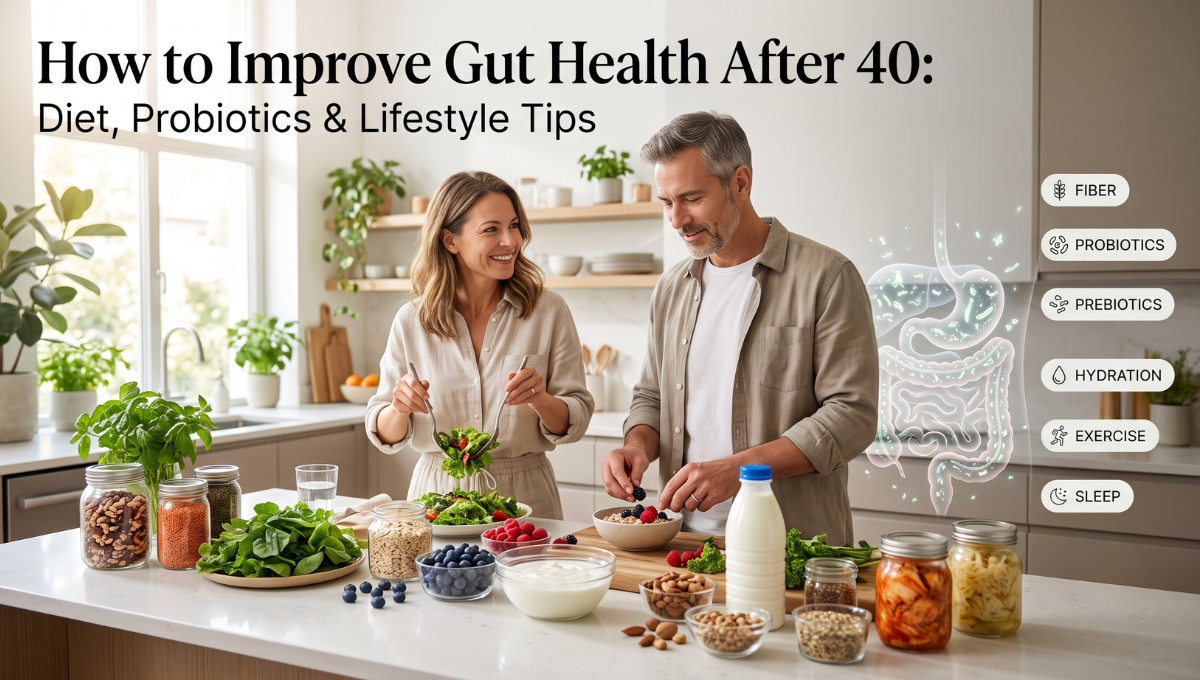
How to Improve Gut Health After 40: Diet, Probiotics & Lifestyle Tips
Gut health becomes an increasingly important part of overall wellness as we get older. If you’re wondering how to improve gut health after 40, the good news is that you don’t need an extreme diet or complicated routine. Simple, consistent habits involving nutritious foods, adequate fiber, physical activity, sleep, hydration and appropriate probiotic use can support a healthier digestive system.
Your gut contains a complex community of microorganisms known as the gut microbiome. Diet and lifestyle can influence this microbial community, which is one reason everyday choices matter. Probiotics are another option, although their effects can vary depending on the specific microorganism, strain and individual.
So, what are the best ways to support gut health after 40? Let’s look at the practical steps that can fit into an everyday lifestyle.
👉 Discover the Gut Health Support Worth Exploring Today
What Happens to Gut Health After 40?
Turning 40 doesn’t automatically mean that your gut health will decline. However, lifestyle, diet, activity levels, medications, sleep and other factors can change over time, potentially affecting digestion and the gut microbiome.
For many adults, this is a good time to pay closer attention to dietary variety, fiber intake, hydration, exercise and overall lifestyle habits.
The goal isn’t to “reset” or “detox” your gut overnight. Instead, focus on building sustainable habits that support digestive health over time.
👉 See Which Probiotic Support Could Fit Your Routine
10 Ways to Improve Gut Health After 40
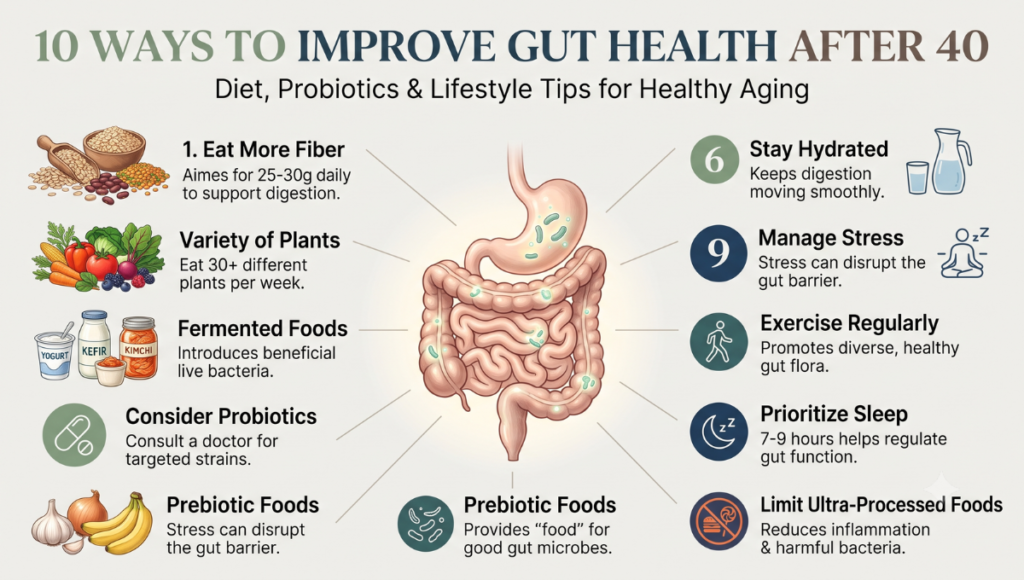
1. Eat More Fiber-Rich Foods
One of the simplest ways to support gut health after 40 is to include more fiber-rich foods in your diet.
Good choices include:
- Beans and lentils
- Oats and whole grains
- Berries and other fruits
- Vegetables
- Nuts and seeds
Fiber can help support regular bowel movements, while certain types of dietary fiber can also serve as fuel for microorganisms in the gut.
If you’re currently eating very little fiber, increase it gradually rather than making a dramatic overnight change. A sudden increase can contribute to gas or bloating in some people. NIH guidance also recommends gradually increasing fiber when digestive symptoms are a concern.
2. Increase the Variety of Plant Foods
Gut health isn’t only about eating one “superfood.”
A better strategy is to regularly include a wide variety of plant foods. Different fruits, vegetables, legumes, whole grains, nuts and seeds provide different types of fibers and plant compounds.
Try adding a new fruit or vegetable to your meals each week. Over time, this can make your diet more diverse without requiring a complicated meal plan.
3. Include Fermented Foods
Fermented foods can be another useful addition to a balanced diet.
Examples include:
- Yogurt containing live cultures
- Kefir
- Kimchi
- Sauerkraut
- Other fermented vegetables
Some fermented foods contain live microorganisms, although the presence and amount can vary considerably between products.
It’s also important to distinguish fermented foods from probiotic supplements. Not every fermented food or product labeled “probiotic” has the same demonstrated health effects.

4. Consider Probiotics for Gut Health
Probiotics are live microorganisms that may provide health benefits when consumed in adequate amounts. They’re available in some foods and dietary supplements.
However, probiotics aren’t one-size-fits-all.
Different probiotic products can contain different genera, species and strains, and research suggests that their effects can differ depending on the specific product and health goal. NIH guidance notes that there are currently no universal recommendations for probiotic use among healthy people.
If you’re considering a probiotic supplement for gut health, look beyond the front-of-package marketing. Check the product label for the microorganism’s genus, species and strain, along with storage instructions and the stated amount of viable microorganisms.
If you have an underlying health condition, take medications or are considering probiotics for a specific digestive problem, talk with a healthcare professional first.
5. Don’t Forget Prebiotic Foods
Probiotics and prebiotics are related, but they’re not the same thing.
Probiotics are live microorganisms. Prebiotics are certain nondigestible food components that can be used as fuel by microorganisms in the gastrointestinal tract.
Prebiotic-containing foods can include various plant foods such as onions, garlic, legumes, oats and other fiber-rich foods.
Rather than focusing exclusively on probiotic supplements, build a diet that consistently provides different sources of dietary fiber.
6. Stay Hydrated
Adequate fluid intake is another basic but often overlooked part of digestive wellness.
Water works alongside dietary fiber to help keep stool softer and support regular bowel movements. Instead of waiting until you’re very thirsty, make drinking fluids throughout the day part of your normal routine.
Your individual fluid needs can vary based on factors such as activity, climate, diet and health status.
7. Stay Physically Active
Your gut-health routine shouldn’t stop at the kitchen.
Regular physical activity is an important part of healthy aging and can complement a nutritious eating pattern. NIDDK recommends healthy eating and regular physical activity as important components of healthy aging.
You don’t necessarily need an intense workout every day. Walking, cycling, swimming, resistance training and other activities that you enjoy can make it easier to stay consistent.
A practical goal is to build movement into your normal day rather than treating exercise as something separate from your lifestyle.
8. Prioritize Quality Sleep
Sleep is another important part of your overall lifestyle.
Instead of looking for a single supplement or food that will transform your gut health, consider your entire routine. Maintaining a consistent sleep schedule, creating a relaxing evening routine and limiting habits that interfere with sleep can support overall wellness.
Think of gut health after 40 as part of a larger healthy-lifestyle picture rather than an isolated problem.
9. Manage Chronic Stress
Stress can affect how you feel physically, including your digestive experience.
That’s why stress management deserves a place in any practical gut health diet and lifestyle plan.
Simple approaches can include:
- Walking outdoors
- Breathing exercises
- Meditation
- Stretching
- Spending time with friends and family
- Taking regular breaks from screens
- Maintaining hobbies you enjoy
The most effective strategy is usually one you can maintain consistently.
10. Limit Highly Processed Foods
You don’t have to eliminate every processed food from your diet.
Instead, focus on making minimally processed, nutrient-dense foods the foundation of most meals. Include vegetables, fruits, legumes, whole grains, nuts, seeds and other nutritious foods regularly.
This approach is generally more sustainable than extreme elimination diets or short-term “gut detox” programs.

Best Foods for Gut Health After 40
If you’re searching for foods for gut health, start with variety rather than a single miracle ingredient.
Consider building meals around:
Fiber-rich foods: oats, beans, lentils, vegetables, fruits, whole grains, nuts and seeds.
Fermented foods: yogurt with live cultures, kefir, kimchi and sauerkraut.
Prebiotic-rich plant foods: onions, garlic, legumes, oats and other high-fiber foods.
A useful rule is to gradually increase the variety of plant foods you eat while paying attention to how your body responds.
If certain foods consistently cause digestive discomfort, don’t assume that you need to eliminate entire food groups permanently. Persistent or severe symptoms deserve professional evaluation.
👉 See the Gut Health Formula People Are Exploring
How to Choose a Probiotic Supplement
If you’re researching the best probiotics for gut health, don’t choose solely based on a large CFU number or a long ingredient list.
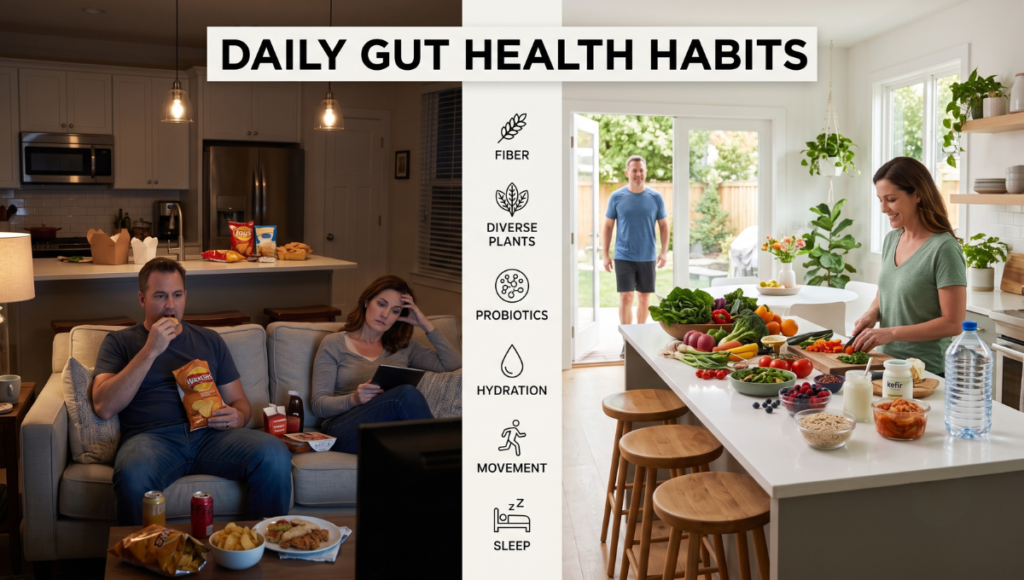
Instead, consider:
- The specific probiotic strains included
- Whether the strains have research relevant to the intended use
- CFU information and when that amount is guaranteed
- Storage requirements
- Expiration or use-by information
- Manufacturer transparency
NIH notes that probiotics are identified by genus, species and strain, and that products can have different effects. It also notes that CFU numbers represent viable microorganisms.
More CFUs do not automatically mean a product is better. The particular strain and evidence behind the intended use matter.
👉 Explore This Popular Probiotic Support Option Today
A Simple 7-Day Gut Health Plan
You don’t have to completely change your lifestyle at once.
Try this simple starting point:
1st Day: Add one extra serving of vegetables.
2nd Day: Include a fiber-rich breakfast such as oats with fruit and nuts.
3rd Day: Try a fermented food containing live cultures.
4th Day: Take a brisk walk or complete another enjoyable physical activity.
5th Day: Add another plant-based food to your meals.
6th Day: Focus on a consistent bedtime and better sleep routine.
7th Day: Review the week and identify the habits you can realistically continue.
The goal is consistency—not perfection.
👉 Check Out the Gut Health Support Formula
Common Gut Health Mistakes After 40
Some of the biggest mistakes involve doing too much too quickly.
Avoid relying on extreme “detox” programs, suddenly consuming very large amounts of fiber, taking multiple supplements without understanding them or assuming that one probiotic product will work for everyone.
It’s also important not to use probiotics as a substitute for appropriate medical care. Research on probiotics is condition-specific, and evidence for many proposed uses remains limited or mixed.
👉 Discover the Daily Probiotic Support Option
How Long Does It Take to Improve Gut Health?
There isn’t a universal timeline for improving gut health.
Your response can depend on your existing diet, lifestyle, digestive health, food choices and other individual factors. Rather than looking for an overnight “gut reset,” focus on sustainable habits that you can maintain for months and years.
A healthier approach is to gradually improve dietary variety, fiber intake, physical activity, hydration, sleep and other lifestyle habits.
👉 See What Makes This Gut Health Support Different
Frequently Asked Questions About Gut Health After 40
What is the best way to improve gut health after 40?
The best approach is usually a combination of a diverse, fiber-rich diet, appropriate fermented foods, regular physical activity, adequate hydration, quality sleep and healthy lifestyle habits. Probiotic supplements may be useful in some situations, but they aren’t necessary or appropriate for everyone.
How can I improve my gut health naturally after 40?
Focus on whole and minimally processed foods, increase dietary variety, eat fiber-rich plant foods, stay hydrated, exercise regularly and prioritize sleep. These habits provide a more sustainable foundation than short-term detox programs.
What foods are best for gut health after 40?
Fiber-rich foods such as vegetables, fruits, beans, lentils, oats, whole grains, nuts and seeds are useful choices. Fermented foods such as yogurt with live cultures, kefir, kimchi and sauerkraut can also be included as part of a balanced diet.
Should adults over 40 take probiotics?
Not necessarily. There are no universal recommendations requiring healthy adults over 40 to take probiotics, and different products can have different effects. If you’re considering a probiotic supplement, discuss your individual situation with a healthcare professional.
How can I improve my gut microbiome naturally?
A practical starting point is to eat a diverse range of plant foods and fiber, include appropriate fermented foods, stay active and maintain healthy lifestyle habits. Avoid expecting a single food or supplement to transform your microbiome.
What should I avoid for better gut health?
Instead of focusing on a long list of forbidden foods, prioritize nutritious, minimally processed foods and limit excessive intake of highly processed foods. If a particular food repeatedly causes symptoms, consider discussing those symptoms with a healthcare professional.
👉 Get More Details on This Probiotic Support Formula
The Bottom Line
Improving gut health after 40 is less about finding one miracle food or supplement and more about building consistent habits. A diverse, fiber-rich diet, fermented foods, appropriate probiotic use, hydration, physical activity, sleep and stress management can all be part of a practical gut-health lifestyle.
If you’re considering a probiotic supplement, remember that products differ by microorganism and strain, and evidence varies depending on the intended use. Choose carefully and speak with a healthcare professional when appropriate.
Most importantly, don’t chase an overnight “gut reset.” Small, sustainable improvements are a much better long-term strategy for supporting digestive and overall health after 40.
👉 Explore the Official Gut Health Support Option
people Also Searching For
PrimeBiome Reviews and Complaints: Is It Worth Buying?
PrimeBiome Reviews 2026: Does This Gut Supplement Work?
Best Probiotic for Gut Health: 7 Things to Check Before Buying
Medical/health disclaimer: This article is for general educational purposes and isn’t a substitute for individualized medical advice, diagnosis or treatment. Persistent, severe or unexplained digestive symptoms should be discussed with a qualified healthcare professional.