
Hearing Health and Healthy Aging: What New Research Says About Staying Active and Connected
Hearing plays an important role in everyday life. From enjoying conversations with family to participating in social activities, the ability to hear and understand speech can influence how people connect with the world around them.
As adults grow older, changes in hearing may become more noticeable. Someone might begin asking others to repeat themselves, struggling to follow conversations in a crowded restaurant, or turning up the television more frequently. Although these changes can happen gradually, they deserve attention.
Research has also explored the relationship between hearing loss, social isolation, cognitive health, and physical function. These connections have prompted growing interest in hearing care and healthy aging.
For people researching ways to support their hearing wellness, understanding the available evidence is an important first step. It can also help consumers evaluate dietary supplements such as SonoVive and understand what they may—and may not—offer.
👉 Curious About Hearing Support? Learn More Here!
How Hearing Health May Be Connected to Physical Well-Being
Hearing is about more than detecting sounds. It helps people communicate, remain socially engaged, and stay aware of their surroundings.
When hearing becomes difficult, everyday activities can require more effort. Following a conversation in a busy environment, understanding a family member over the phone, or participating in a group discussion may become frustrating.
Some people respond by gradually withdrawing from activities they once enjoyed. Over time, reduced social participation may affect opportunities for movement, companionship, and emotional support.
Researchers have investigated whether hearing difficulties and social isolation are associated with changes in physical function as people age. Although these relationships are important, an association does not establish that hearing loss directly causes physical decline. Other health conditions and age-related changes may also contribute.
The practical message is straightforward: hearing concerns should not be dismissed as an unavoidable part of getting older.
👉 Discover SonoVive and Explore Its Ingredients Today!
Why Hearing Loss and Frailty Deserve Attention
Frailty is a health condition characterized by reduced physical reserves and increased vulnerability to stressors such as illness, injury, or hospitalization. It can develop gradually, and its effects vary from person to person.
Research examining older adults has explored whether hearing loss is associated with a greater likelihood of progressing toward frailty or a lower likelihood of recovering from it.
Several possible explanations have been proposed.
1. Reduced Social Interaction
People who struggle to understand speech may find social gatherings tiring or uncomfortable. Busy restaurants, family celebrations, and group conversations can become especially challenging.
When communication becomes difficult, some people may participate less frequently in social activities. This can reduce opportunities for meaningful interaction and practical support.
Maintaining relationships and seeking help with hearing difficulties may make it easier to remain involved in everyday life.
2. Changes in Physical Activity
Social participation often involves movement, whether that means visiting friends, attending community events, walking with family, or participating in recreational activities.
If hearing difficulties contribute to reduced social engagement, opportunities for physical activity may also decrease for some individuals.
However, hearing loss is only one potential factor. Mobility limitations, chronic illness, medication effects, and other circumstances can influence activity levels as well.
3. Greater Effort During Conversations
Understanding speech requires the brain to interpret sounds, recognize words, and use context to follow meaning.
When speech is difficult to hear, conversations may require additional concentration. This can make communication more tiring, particularly in noisy environments.
The degree of difficulty varies between individuals. Persistent problems understanding speech are a good reason to consider a professional hearing evaluation.
4. Hearing and Balance Concerns
The auditory and vestibular systems are located within the inner ear, but hearing and balance are not identical functions.
Certain inner-ear conditions can affect both hearing and balance. Other causes of hearing loss may not produce balance problems at all.
Anyone experiencing dizziness, unsteadiness, or falls should seek appropriate medical evaluation rather than assuming that hearing loss is the cause.
👉 See What You Should Know About SonoVive!
Early Signs of Hearing Loss You Should Not Ignore
Hearing changes can develop slowly, making them difficult to recognize at first. Friends and family members sometimes notice a change before the person experiencing it does.
Common warning signs include:
- Frequently asking people to repeat themselves.
- Feeling that other people mumble or speak unclearly.
- Finding conversations in restaurants or crowded places difficult to follow.
- Increasing the television or phone volume more than other people prefer.
- Struggling to understand speech during telephone calls.
- Misunderstanding questions or missing parts of conversations.
- Avoiding group discussions because following them takes too much effort.
These signs do not automatically mean someone has hearing loss. However, persistent symptoms warrant attention.
A hearing assessment with a qualified healthcare professional can help identify whether hearing has changed and whether further evaluation or treatment is appropriate.
Important: Sudden hearing loss requires urgent medical attention. Do not delay care while trying a dietary supplement or waiting for symptoms to improve.
Practical Ways to Support Hearing Health as You Age
Although not every cause of hearing loss can be prevented, several practical steps can help protect hearing and support overall well-being.
Protect Your Ears From Excessive Noise
Repeated exposure to loud sounds can damage hearing. Keep headphone volume at a reasonable level, take breaks from noisy environments, and use appropriate hearing protection when exposed to loud machinery, concerts, or other high-noise settings.
Schedule Hearing Assessments When Needed
Do not wait until communication becomes extremely difficult before seeking advice. A professional assessment can identify hearing changes and help determine suitable options.
Stay Socially Connected
Make time for conversations, family activities, hobbies, and community participation. If hearing difficulties make communication challenging, consider quieter meeting places, face-to-face conversations, and asking others to speak clearly.
Maintain General Physical Health
Regular physical activity, balanced nutrition, adequate sleep, and management of chronic health conditions contribute to overall health as people age.
These habits should not be described as cures for hearing loss, but they can form part of a broader approach to healthy aging.
Review Medicines and Supplements Carefully
Some medicines can affect hearing or interact with dietary supplements. Discuss potential side effects and interactions with a qualified healthcare professional rather than stopping prescribed treatment on your own.
What Is SonoVive? Understanding This Hearing Support Supplement
For adults exploring hearing wellness products, SonoVive is a dietary supplement marketed for hearing and auditory health support.
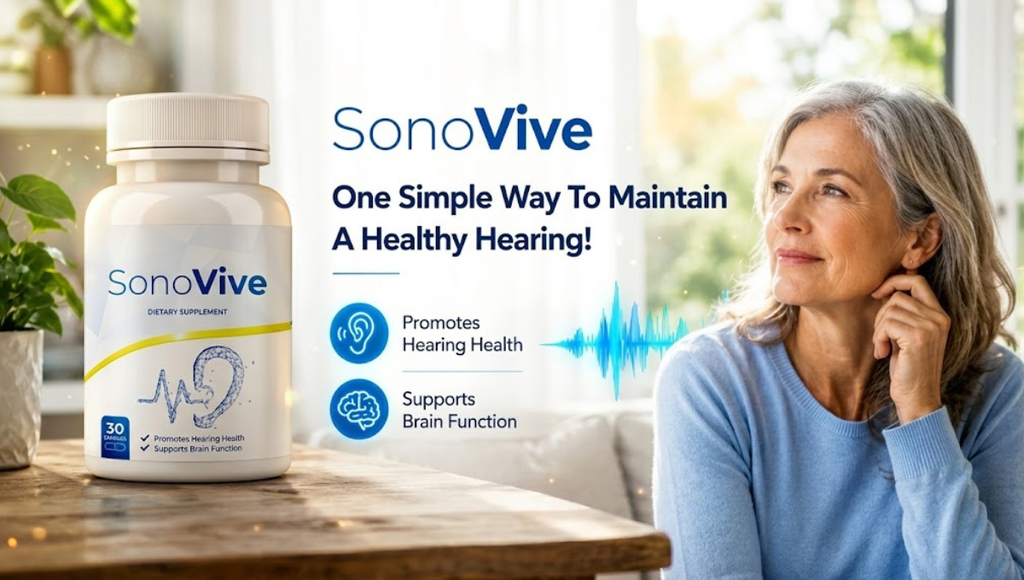
Its sales presentation discusses a combination of botanical and other ingredients, including Ginkgo biloba, St. John’s wort, Bacopa monnieri, vinpocetine, and Huperzine-A.
These ingredients have different research histories and proposed biological effects. Some are commonly discussed in relation to circulation or cognitive function, while others have been studied for their effects on the nervous system.
However, evidence about an individual ingredient does not establish that a finished supplement delivers the same benefits. The amounts used, the overall formulation, product quality, and clinical evidence all matter.
SonoVive should therefore be evaluated as a dietary supplement rather than a proven treatment for hearing loss.
👉 Explore SonoVive’s Formula, Benefits, and Safety!
What Benefits Does SonoVive Claim to Offer?
SonoVive is marketed around hearing wellness and the body’s auditory system. Its sales presentation also discusses circulation and neurological function.
People researching the product may want to understand:
- Hearing wellness: The product’s primary marketing focus is support for auditory health.
- Botanical ingredients: The formula features ingredients commonly used in dietary supplement products.
- Cognitive wellness: Some of the ingredients are associated with research into memory and cognitive function.
- Convenience: The product is presented as a ready-made supplement rather than a collection of individual ingredients.
These points describe the product’s positioning and intended appeal. They do not demonstrate that SonoVive restores hearing, repairs auditory nerves, prevents tinnitus, or prevents age-related physical decline.
At present, I cannot verify independent clinical evidence establishing that the finished SonoVive formula produces these outcomes.
👉 Discover the Facts Before Choosing SonoVive!
What Should You Check Before Buying SonoVive?
Before purchasing any hearing support supplement, take time to examine the details.
1. Review the complete ingredient label. Check the quantities of active ingredients, recommended serving size, and any additional ingredients.
2. Understand the available evidence. Research into an individual botanical should not be confused with a clinical trial of the complete product.
3. Consider potential interactions. Some herbal ingredients can interact with prescription medicines or cause adverse effects. Ask a healthcare professional whether the formula is appropriate for you.
4. Verify the current price and refund terms. Check the official sales page for the latest package options, shipping details, and guarantee conditions.
5. Maintain realistic expectations. A dietary supplement is not a replacement for hearing aids, professional evaluation, or evidence-based medical treatment when these are needed.
You can review the product details on the SonoVive sales page.
👉 Explore SonoVive’s Ingredients and Make an Informed Choice!
Can a Hearing Supplement Replace a Professional Hearing Test?
No. A supplement should not replace a hearing assessment.
Hearing difficulties can arise from several causes, including earwax buildup, infections, noise exposure, age-related changes, and other medical conditions. The appropriate response depends on the underlying cause.
A hearing professional can assess hearing ability and explain suitable options. Depending on the findings, these may include treatment for a specific condition, hearing aids, assistive listening devices, communication strategies, or further medical investigation.
There is currently insufficient product-specific evidence to conclude that SonoVive can diagnose, treat, or reverse any of these conditions.
People with persistent ringing in the ears should also seek appropriate advice, particularly if the symptoms are new, worsening, or accompanied by other changes.
👉 Want to Learn More? Visit the Official SonoVive Website!
The Bottom Line: Make Hearing Health Part of Healthy Aging
Hearing health can influence communication, social participation, and quality of life. Research into the relationship between hearing loss, social isolation, and physical frailty reinforces the importance of recognizing hearing difficulties and seeking appropriate care.
Practical steps include protecting your ears from excessive noise, staying socially active, maintaining general health, and arranging a hearing assessment when concerns arise.
SonoVive is one product marketed to people interested in hearing wellness. If you are considering it, examine its current ingredient label, understand the limitations of the available evidence, and discuss possible interactions with a qualified healthcare professional.
No dietary supplement should be relied upon to restore hearing or prevent physical decline without reliable evidence demonstrating those effects.
Taking hearing concerns seriously—and choosing care based on sound medical advice—can help you make more informed decisions about your long-term well-being.
👉 Find Out More About SonoVive Before You Buy!
Medical Disclaimer
This article is for informational and educational purposes only and is not medical advice. SonoVive is a dietary supplement, not a proven treatment for hearing loss, tinnitus, frailty, or cognitive decline. Individual ingredients may have side effects or interact with medicines. Consult a qualified healthcare professional before starting a supplement, and seek urgent medical attention for sudden hearing loss.
Affiliate Disclosure
This article may contain affiliate links. If you purchase SonoVive through an affiliate link, the publisher may receive a commission at no additional cost to you. Affiliate relationships do not establish that a product is effective, and product claims should be evaluated independently.