
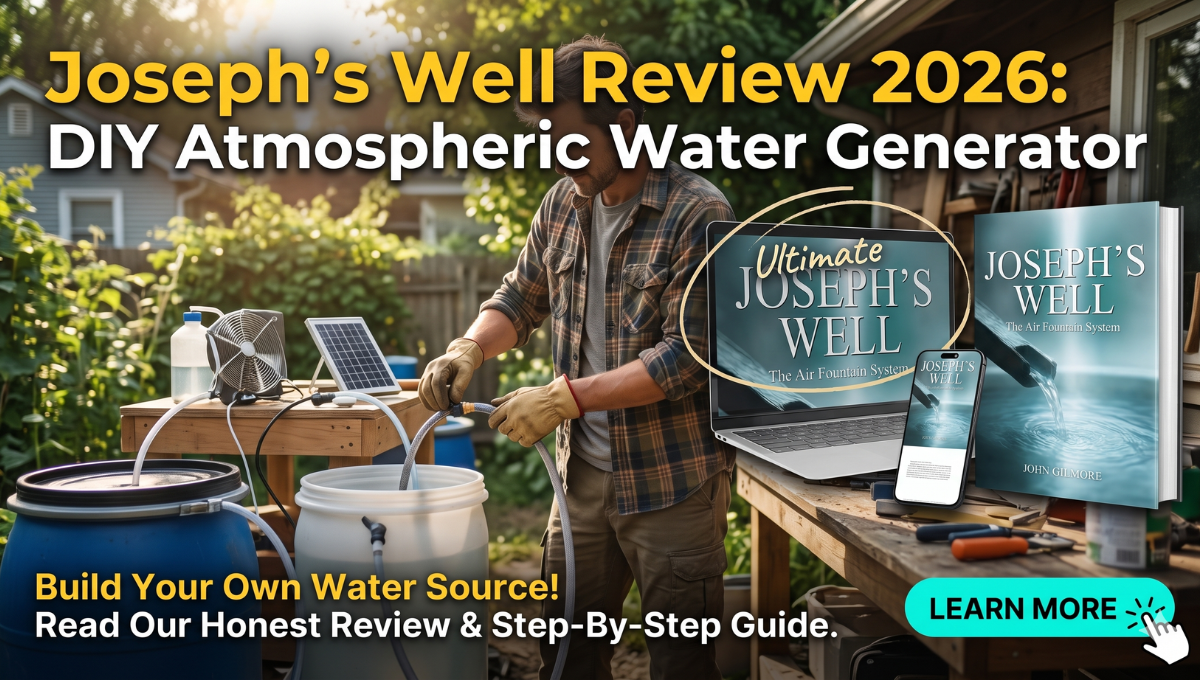
Introduction: Can You Make Drinking Water From Air?
Imagine being able to collect water from the air around you instead of relying entirely on bottled water or traditional water supplies. It sounds fascinating, but is building a DIY atmospheric water generator practical for an ordinary homeowner?
That question has attracted attention from DIY enthusiasts, homeowners, outdoor enthusiasts, and people interested in alternative water collection methods.
If you have searched for “How do I make a DIY atmospheric drinking water generator?”, you may have come across Joseph’s Well, a product marketed around DIY water-generation instructions.
But before spending money, it is worth understanding how atmospheric water generation works, what building a system may involve, and whether a digital guide is suitable for your needs.
In this Joseph’s Well review for 2026, we will explore the concept, potential benefits, limitations, practical considerations, and important questions to ask before buying.
👉 [Explore the Joseph’s Well DIY Guide Here]
What Is Joseph’s Well?
Joseph’s Well is marketed as a DIY water-generation guide intended for people interested in obtaining water from atmospheric moisture.
Unlike a ready-made appliance, a digital guide is intended to provide information or instructions that readers can use when planning and constructing a project. Buyers should therefore distinguish the cost of the guide from the additional expenses of sourcing materials, assembling equipment, operating the system, and maintaining it.
The exact contents of the current offer should be verified on the official sales page before purchasing.
For someone researching DIY atmospheric water generator plans, the main question is whether the instructions provide enough practical information to understand the construction process, required components, and limitations.
Before making a decision, check what the guide actually includes, whether additional materials are necessary, and whether the project matches your technical skills and budget.
👉 [See What the Joseph’s Well Guide Offers]
How Do I Make a DIY Atmospheric Drinking Water Generator?
An atmospheric water generator collects moisture from the air and converts it into liquid water. One common approach uses condensation, a process familiar from water droplets forming on a cold surface.
Here is the basic principle behind a condensation-based system.
1. Collect Moisture From Humid Air
Air contains varying amounts of water vapor. When humidity is sufficiently high, there is more moisture available for a system to potentially collect.
A fan or another air-moving mechanism may draw air across a collection surface, depending on the design.
2. Cool the Air or Collection Surface
When moist air encounters a surface below its dew point, water vapor can condense into liquid droplets.
Refrigeration-based systems use energy to cool air or a surface. Other approaches may work differently, depending on their design and operating conditions.
The amount of water collected depends on factors such as humidity, temperature, airflow, surface temperature, and system efficiency.
3. Collect the Condensed Water
Condensed droplets must flow into an appropriate collection reservoir. Materials that contact the water should be suitable for potable-water applications if drinking water is the intended use.
The collection pathway also needs protection from dust, microorganisms, insects, and other contaminants.
4. Treat and Test the Water
Condensed water is not automatically safe to drink.
Airborne contaminants, contaminated surfaces, storage containers, and microbial growth can affect water quality. An appropriate treatment process and suitable water-quality testing are necessary to determine whether collected water is potable.
A DIY system should not be treated as a verified drinking-water source without proper assessment.
👉 [Explore DIY Atmospheric Water Generator Plans]
What Materials Might a DIY Atmospheric Water Generator Require?
The components depend on the design and the quantity of water the system is intended to collect.
A condensation-based project may require some combination of:
- An air intake and fan.
- A cooling mechanism or condensation surface.
- Tubing and a suitable water collection reservoir.
- A frame or protective enclosure.
- Electrical components and appropriate safety protections.
- Suitable filtration or other water-treatment equipment.
- Cleaning and maintenance supplies.
This is a general overview of possible components, not a verified parts list for Joseph’s Well.
Before beginning construction, determine whether the project requires specialist tools, electrical work, refrigeration expertise, or components that may be difficult to source locally.
Electrical and refrigeration systems can present serious hazards when assembled incorrectly. Follow appropriate safety standards and seek qualified assistance when necessary.
👉 [Check the Joseph’s Well Guide Details]
How Much Does a DIY Atmospheric Water Generator Cost?
The total cost of building a DIY atmospheric water generator can vary considerably. There is no single price that applies to every design.
Your overall budget may include several expenses:
| Cost category | What to consider |
|---|---|
| Guide | The current purchase price and what is included |
| Components | Fans, cooling equipment, tubing, and collection materials |
| Tools | Equipment needed for assembly and maintenance |
| Electricity | Energy consumed during operation |
| Water treatment | Suitable treatment, testing, and replacement supplies |
| Maintenance | Cleaning, repairs, and replacement components |
The guide price is only one part of the total project cost. A system that requires continuous cooling may consume substantial electricity, and actual operating costs depend on efficiency and local energy prices.
For readers in the USA, UK, and Canada, availability of parts, electrical standards, energy costs, and climate conditions can differ.
Before purchasing any guide, estimate the full project cost rather than relying exclusively on a promotional price or projected savings.
👉 [Check the Current Joseph’s Well Offer]
Joseph’s Well Review: Potential Benefits and Limitations
An objective Joseph’s Well review should consider both the possible advantages of DIY learning resources and the practical challenges of atmospheric water generation.
Potential Benefits
1. Learn about an alternative water-collection method
Atmospheric water generation is an interesting subject for people who want to understand condensation and explore different engineering approaches to water collection.
2. Explore a DIY project
People who enjoy building projects may appreciate having a structured resource to consult when researching a system.
3. Understand the underlying technology
A useful guide may help readers become familiar with relevant components, assembly concepts, and design considerations. Verify the actual scope of the current Joseph’s Well offer before assuming specific instructions or resources are included.
4. Evaluate a project before committing to construction
Researching a design in advance can help you identify equipment requirements, likely expenses, and technical challenges.
👉 [Discover the Joseph’s Well DIY Resource]
Potential Limitations
1. Construction may require additional spending
Purchasing a guide does not necessarily provide the equipment needed to build the system. Materials, tools, and installation can add significantly to the cost.
2. Water output is not guaranteed
Performance depends on the design, local humidity, temperature, operating conditions, and energy consumption. Do not assume a particular daily water output without credible test results.
3. Some designs require technical knowledge
Cooling systems, electrical components, and water-treatment equipment can require specialist skills.
4. Potability needs separate verification
A functioning condensation system does not automatically produce water that meets drinking-water standards.
5. The project may not suit every climate
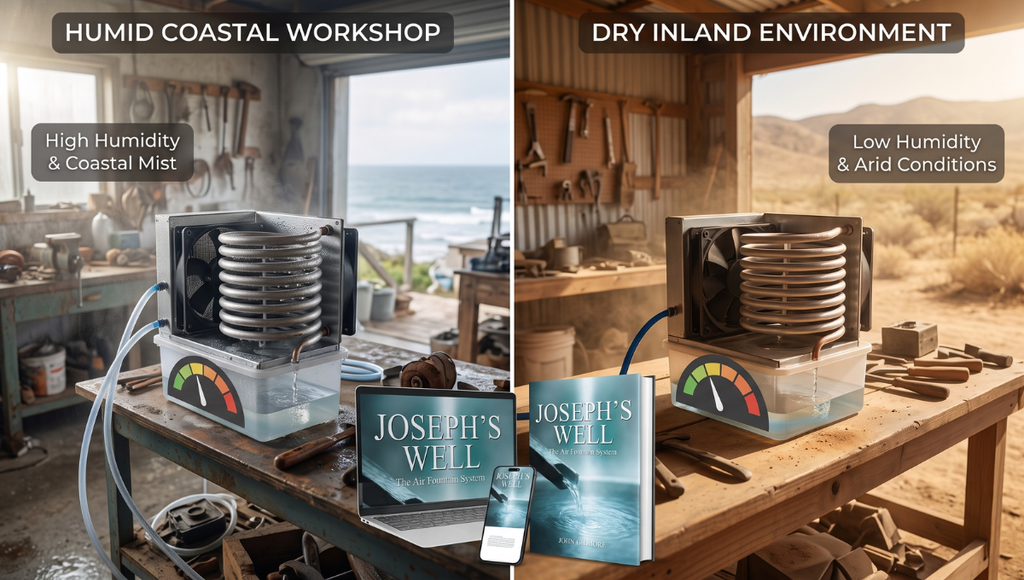
Atmospheric moisture availability varies by location and season. A design that performs under humid conditions may collect substantially less water in a dry environment.
These limitations matter when evaluating whether the guide is appropriate for your needs.
Does an Atmospheric Water Generator Work in Dry Climates?
Atmospheric water generation depends partly on the amount of moisture available in the surrounding air.
In humid conditions, more water vapor may be available for collection. In dry conditions, collection can become more difficult, and a system may need to consume significant energy to produce a limited amount of water.
Temperature also matters. The relationship between air temperature, relative humidity, and dew point affects how much moisture can condense.
For this reason, anyone considering a DIY atmospheric water generator should investigate local climate conditions before building one.
A useful evaluation should consider expected water production under realistic conditions, energy requirements, seasonal changes, and the availability of a reliable alternative water supply.
👉 [Review the Joseph’s Well Guide Before Buying]
Is Water From an Atmospheric Water Generator Safe to Drink?
Water safety is one of the most important issues to consider when building any system intended to supply drinking water.
Water vapor condensing into liquid does not guarantee that the collected water is free from contaminants. Air quality, the materials used in the equipment, storage conditions, and microbial growth can all affect the final result.
A system intended for drinking water may need suitable filtration, disinfection, hygienic collection, and independent testing based on the relevant water-quality requirements.
Filtration alone does not remove every possible contaminant, and different treatment methods address different risks.
Do not assume that a DIY design produces potable water simply because it collects clear liquid. Until the system’s water quality has been appropriately established, use a verified safe drinking-water source instead.
👉 [Explore the Guide and Its Project Details]
Joseph’s Well Reviews 2026: What Should Buyers Check?
When evaluating Joseph’s Well reviews in 2026, look beyond promotional descriptions and focus on verifiable details.
Before making a purchase, investigate these questions:
- What is included? Confirm the contents of the digital guide and any additional resources.
- Are construction details sufficiently clear? Look for evidence of practical instructions, component requirements, and relevant safety information.
- What is the total project cost? Calculate the estimated expense of materials, tools, energy, and ongoing maintenance.
- Are performance claims substantiated? Look for credible testing under clearly described conditions.
- What are the purchase terms? Verify the current price, any additional charges, and refund eligibility on the official checkout page.
- Is it appropriate for your location? Consider local humidity, climate, electricity costs, and component availability.
Be cautious of reviews that promise unlimited free water, guaranteed savings, or a specific production rate without credible evidence.
If you are comparing customer experiences, prioritize detailed accounts that explain what was purchased, what was built, and what results were actually observed.
👉 [View Joseph’s Well Offer and Purchase Terms]
Is Joseph’s Well Worth Buying?
Whether Joseph’s Well is worth buying depends on your goals, budget, technical experience, and expectations.
It may be worth investigating if you are interested in DIY water-generation concepts and want to evaluate a dedicated guide before planning a project.
However, it may be less suitable if you expect a finished appliance, guaranteed drinking-water production, or a complete system without additional equipment and expenses.
The most sensible approach is to review the actual contents of the guide, compare its instructions with your project requirements, estimate the complete build cost, and examine the current purchase terms.
Avoid making a decision based solely on promises of self-sufficiency or potential savings. A realistic assessment of energy use, climate, water safety, and maintenance is essential.
👉 [Visit the Joseph’s Well Official Offer Page]
Frequently Asked Questions
1. How do I make a DIY atmospheric drinking water generator?
A condensation-based design generally uses humid air, a cooling surface, a collection reservoir, and appropriate water treatment. The exact components depend on the design, and collected water must be assessed for safety before drinking.
2. Is Joseph’s Well a physical water generator?
Joseph’s Well is marketed as a DIY guide rather than a ready-made atmospheric water generator. Check the official offer to confirm precisely what is included.
3. How much does a DIY atmospheric water generator cost?
Costs depend on the design, cooling equipment, materials, tools, electricity use, and water treatment. Calculate the total estimated cost before beginning construction.
4. Can an atmospheric water generator work anywhere?
No. Performance depends on humidity, temperature, equipment design, and available energy. Dry environments can present significant challenges.
5. Is Joseph’s Well worth buying in 2026?
It depends on the guide’s actual contents, your technical ability, and your budget. Review the purchase terms and expected project expenses before deciding.
6. Can atmospheric water be consumed without filtration?
Do not assume it is safe to drink without appropriate water-quality assessment. Contamination can occur during condensation, collection, and storage, so treatment and testing may be necessary.
Final Verdict: Should You Explore Joseph’s Well?
This Joseph’s Well review has covered the fundamentals of DIY atmospheric water generation, possible project costs, climate considerations, water safety, and the questions buyers should ask before purchasing.
The technology offers an interesting way to explore moisture collection, but building a practical system requires more than simply condensing water from the air. Energy use, equipment requirements, maintenance, and water quality all matter.
If you are considering Joseph’s Well, verify the guide’s contents and current purchase terms before making a decision. Compare the information provided with your own technical requirements and calculate the full cost of building and operating the system.
A well-informed purchase is more valuable than an unrealistic promise of effortless water production.
👉 [Explore Joseph’s Well and Make an Informed Decision]
people Also Searching For:
Joseph’s Well System Explained (With Diagram & PDF Guide)
How to Build Joseph’s Well (Step-by-Step Guide for Beginners)
Joseph’s Well Review: Water System, Benefits, Pricing & Real Results
Joseph’s Well Reviews (2026) | Water System Guide + Pricing
Final note: This article is for informational purposes. Actual performance, construction costs, and water safety depend on the specific system and operating conditions. No particular water output or financial saving is guaranteed.
Affiliate disclosure: This article may contain affiliate links. If you purchase through these links, we may earn a commission at no additional cost to you.
1 thought on “Joseph’s Well Review 2026: DIY Atmospheric Water Generator”