
Pelvic Floor Exercises: 7 Moves Women Should Know
Pelvic floor exercises can be a simple way to build awareness, coordination, and strength in the muscles that support the bladder, bowel, and pelvic organs. Yet many women are unsure which exercises to perform, how often to practice them, or whether they are doing them correctly.

The good news is that pelvic floor training doesn’t have to be complicated. A combination of targeted contractions, relaxation, breathing, and full-body movements can help you develop a more consistent routine.
In this guide, you’ll learn 7 pelvic floor exercises for women, including beginner-friendly movements you can practice at home. You’ll also learn common mistakes to avoid and how to approach pelvic floor training safely and consistently.
👉 Discover a Structured Pelvic Floor Routine
Important: This article provides general educational information and isn’t a substitute for individualized medical advice. If you experience pelvic pain, significant symptoms, worsening problems, or concerns about your pelvic floor, speak with an appropriate healthcare professional.
What Are Pelvic Floor Exercises?
Pelvic floor exercises are movements designed to help you become more aware of and train the muscles forming the base of the pelvis.
These muscles play an important role in supporting pelvic structures and coordinating functions such as bladder and bowel control. Pelvic floor training can involve both contracting and relaxing these muscles.
One of the best-known examples is the Kegel exercise, which involves gently contracting the pelvic floor and then releasing the contraction.
However, pelvic floor training doesn’t have to consist exclusively of Kegels. Breathing exercises, bridges, squats, and coordination exercises can also be incorporated into a broader movement routine.
The goal isn’t simply to squeeze as hard or as often as possible. Good technique, controlled movement, relaxation, and consistency are important parts of a balanced approach.
👉 See How This Pelvic Floor Program Works
Why Do Women Practice Pelvic Floor Exercises?
Women may explore pelvic floor exercises for many different reasons.
Some are interested in maintaining pelvic muscle strength as part of an overall fitness routine. Others may want to learn more about pelvic floor awareness, muscle coordination, or exercises that can be performed at home.
Pelvic floor function can also change with factors such as pregnancy, childbirth, aging, hormonal changes, and other individual circumstances.
Because everyone’s situation is different, there isn’t one exercise routine that is appropriate for every woman.
If you’re experiencing persistent leakage, pelvic pain, pressure, difficulty emptying your bladder or bowel, or other concerning symptoms, consider speaking with a qualified healthcare professional or pelvic health physiotherapist rather than relying solely on general exercise advice.
👉 Explore a More Guided Approach Today
7 Pelvic Floor Exercises Women Should Know
1. Basic Kegel Exercise
The Kegel exercise is one of the most commonly discussed pelvic floor exercises.
To practice it, imagine gently stopping the flow of urine or preventing yourself from passing gas. The muscles involved in that action are part of the pelvic floor.
Once you’ve identified the muscles, gently contract them for a few seconds and then completely relax.
Beginner approach:
- Start with a gentle contraction.
- Hold for a comfortable amount of time.
- Relax fully.
- Repeat several times.
- Continue breathing normally.
Avoid repeatedly practicing Kegels while urinating. The exercise is useful for learning pelvic floor control, but routinely interrupting your urine stream isn’t generally recommended as a training method.
2. Quick Pelvic Floor Contractions
Not every pelvic floor contraction needs to be a long hold.
Quick contractions involve gently tightening and releasing the pelvic floor in a controlled manner.
Try:
- Relax your abdominal muscles and shoulders.
- Gently contract the pelvic floor.
- Release completely.
- Pause briefly.
- Repeat.
The emphasis should be on control rather than force.
If you notice that you’re clenching your buttocks, thighs, or abdomen excessively, reduce the intensity and focus on isolating the movement more comfortably.
3. Pelvic Floor Relaxation With Breathing
A strong pelvic floor isn’t only about contraction. Learning how to relax the muscles is also important.
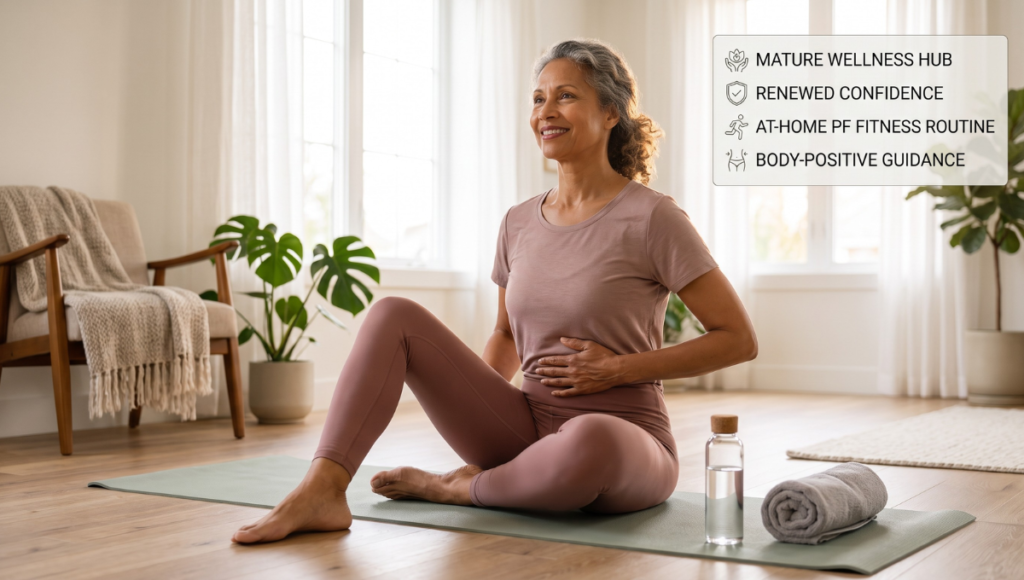
Sit or lie down comfortably and take slow, relaxed breaths.
As you inhale, allow your abdomen and pelvic area to soften. As you exhale, maintain a relaxed posture rather than intentionally squeezing everything tightly.
This exercise can help you become more aware of the difference between contraction and relaxation.
For beginners, spending a few minutes developing this awareness can be just as useful as immediately increasing the number of repetitions.
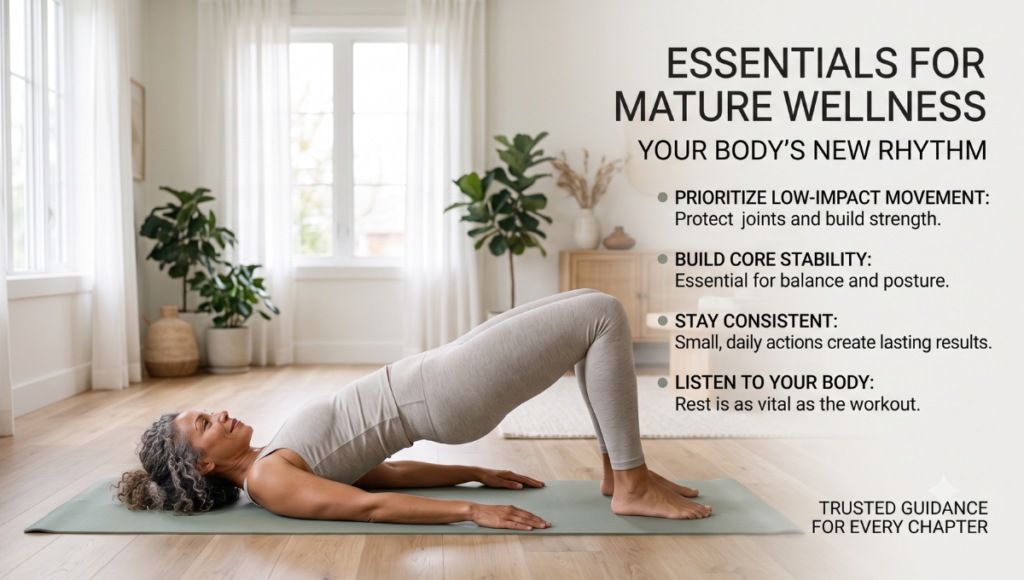
4. Glute Bridge
The glute bridge is a full-body movement that targets the gluteal muscles while requiring coordination through the trunk and pelvis.
To perform it:
- Lie on your back with your knees bent.
- Place your feet comfortably on the floor.
- Keep your shoulders relaxed.
- Lift your hips gradually.
- Pause briefly at the top.
- Lower your hips with control.
Focus on smooth movement rather than trying to squeeze every muscle as hard as possible.
You can combine the movement with relaxed breathing and pelvic-floor awareness.
5. Bodyweight Squat
Squats are another functional movement that can be incorporated into a pelvic-floor-focused fitness routine.
Stand with your feet approximately hip-width apart. Bend your knees and hips while keeping your movement controlled, then return to standing.
For beginners, use a chair behind you as a target.
A useful approach is to coordinate your breathing with the movement instead of holding your breath. If squats cause pain, pressure, or other concerning symptoms, stop and seek individualized guidance.
6. Bird Dog
The bird dog is a balance and core-coordination exercise that can help develop control through the trunk and pelvis.
Start on your hands and knees.
Then:
- Brace your body gently without holding your breath.
- Extend one arm and the opposite leg.
- Keep your hips relatively stable.
- Return to the starting position.
- Switch sides.
Begin with small movements if maintaining balance is difficult.
The objective isn’t to lift your arm and leg as high as possible. Controlled movement and stable positioning are more important.
7. Pelvic Floor + Breathing Coordination
The final exercise combines pelvic floor awareness with relaxed breathing.
Sit comfortably or lie down. Take a slow breath and pay attention to how your abdomen, ribs, and pelvic area move.
Then gently contract the pelvic floor without tightening your entire body.
Release the contraction completely before repeating.
This teaches an important principle of pelvic floor training: strength and relaxation work together.
Rather than treating pelvic floor exercises as a race to complete more repetitions, focus on developing controlled, comfortable movement.
👉 Want a Simpler Way to Stay Consistent?
How Often Should You Do Pelvic Floor Exercises?
Consistency is generally more useful than occasionally doing a very long workout.
A beginner might start with a short routine and gradually develop better awareness and control.
Instead of immediately performing dozens of repetitions, concentrate on:
- Good technique
- Comfortable contractions
- Complete relaxation
- Normal breathing
- Consistent practice
Your ideal routine can depend on your individual needs, fitness level, symptoms, and pelvic floor function.
If you’re unsure how frequently you should exercise, a pelvic health professional can help develop an individualized program.
👉 Discover the Routine Women Are Exploring
Common Pelvic Floor Exercise Mistakes
Doing pelvic floor exercises incorrectly can make the routine less useful.
Squeezing Too Hard
More force isn’t necessarily better. Excessive tension can make it difficult to relax the pelvic floor.
Holding Your Breath
Try to breathe naturally during exercises. Breath-holding can increase unnecessary tension.
Tightening Everything
Some beginners unintentionally squeeze their buttocks, thighs, and abdominal muscles at the same time.
Focus on controlled pelvic floor movement rather than maximum tension throughout the body.
Ignoring Relaxation
Pelvic floor training shouldn’t be only about contraction. Learning to relax the muscles is also important.
Doing Too Much Too Soon
Increasing repetitions rapidly isn’t necessarily the best approach. Start gradually and focus on technique.
👉 See the Full Pelvic Floor Training Approach
Can You Do Pelvic Floor Exercises at Home?
Yes, many basic pelvic floor exercises can be practiced at home without specialized equipment.
A quiet space, comfortable clothing, and a few minutes of uninterrupted time may be enough to begin.
However, convenience shouldn’t replace proper guidance when symptoms are persistent or complex. A healthcare professional can assess individual circumstances and recommend an appropriate approach.
👉 Explore Your Options for Structured Training
What If You Want a Structured Pelvic Floor Routine?
Learning individual pelvic floor exercises is one option. Another is following a structured exercise program that organizes movements and provides guidance about progressing through a routine.
This can be useful for people who prefer having a defined plan rather than deciding which exercises to perform each day.
Pelvic Floor Strong is one program you can research if you’re interested in a more structured approach to pelvic floor exercise.
Because it is a third-party product, review the program’s current information, pricing, terms, and claims directly before purchasing.
Affiliate disclosure: This article may contain affiliate links. If you purchase through one of these links, we may receive a commission at no additional cost to you.
👉 Ready to Take Your Routine Further?
Pelvic Floor Exercises: The Key Takeaway
Pelvic floor exercises don’t have to be complicated. Basic Kegels, quick contractions, relaxation exercises, bridges, squats, bird dogs, and breathing coordination can all be incorporated into a broader pelvic-floor-focused routine.
The most important principles are controlled movement, appropriate intensity, relaxation, breathing, and consistency.
If you’re a beginner, start gradually rather than trying to perform an advanced routine immediately. And if you have persistent symptoms, pain, or concerns about your pelvic floor, seek individualized professional guidance.
For women who prefer following a structured exercise program rather than creating a routine independently, Pelvic Floor Strong is another option to investigate.
👉 See What a Guided Routine Includes
Frequently Asked Questions
What are the best pelvic floor exercises?
There isn’t one exercise that is best for everyone. Kegels, controlled contractions, relaxation exercises, bridges, squats, and coordination exercises can all be included depending on individual needs and goals.
How often should you do pelvic floor exercises?
The appropriate frequency depends on the individual and the type of exercise being performed. Beginners should prioritize proper technique and gradual progression rather than immediately doing large numbers of repetitions.
Can beginners do pelvic floor exercises?
Yes. Many pelvic floor exercises can be modified for beginners. Starting with gentle contractions, relaxation, and breathing awareness can help you learn the basic movements.
Can you do pelvic floor exercises at home?
Many basic exercises can be performed at home without equipment. However, people experiencing persistent or concerning symptoms should consider professional assessment.
How long does it take pelvic floor exercises to work?
Results can vary considerably between individuals and depend on factors such as technique, consistency, starting condition, and the reason for exercising. Avoid programs that guarantee a specific result or timeline for everyone.
What muscles should you feel during pelvic floor exercises?
You should focus on the pelvic floor rather than deliberately clenching your thighs, buttocks, or other muscles. Learning the correct technique can be difficult for some people, so professional guidance may be useful.
What are common pelvic floor exercise mistakes?
Common mistakes include excessive squeezing, breath-holding, using surrounding muscles unnecessarily, skipping relaxation, and progressing too quickly.
When should you talk to a healthcare professional?
Consider professional guidance if you experience pelvic pain, significant or worsening symptoms, difficulty controlling your bladder or bowel, a sensation of pelvic pressure or bulging, or uncertainty about how to perform the exercises correctly.
👉 Discover a New Way to Train Your Pelvic Floor
People Also Looking For:
Pelvic Floor Exercises for Bladder Control: How to Do Them
How to Tighten Pelvic Floor Muscles Quickly
Pelvic Floor Strong Reviews 2026: Benefits & Results